Quartz Countertops vs Marble Countertops: Which Adds More Value to Your Home?
When homeowners plan a kitchen or bathroom renovation, choosing the right countertop material can have a significant impact on both the appearance of the space and the long-term value of the property. Two materials frequently considered for premium projects are quartz and marble. Both can create beautiful surfaces, but they offer very different advantages when it comes to durability, maintenance, cost, design flexibility, and resale appeal.
The quartz countertops vs marble countertops debate is especially relevant for homeowners in South Florida, where busy lifestyles, humidity, natural light, luxury design trends, and property values can influence renovation decisions. Marble has been associated with luxury and timeless architecture for generations, while quartz has become increasingly popular because it combines sophisticated designs with practical everyday performance.
So, which material actually adds more value to your home? The answer depends on what you mean by value. Marble may provide unmatched natural character and prestige, while quartz can offer broader buyer appeal because of its durability and lower maintenance requirements.
This complete guide compares quartz vs marble countertops across the factors that matter most to homeowners, including cost, maintenance, durability, appearance, lifespan, kitchen performance, bathroom applications, and potential resale value.
What Are Quartz Countertops?
Quartz countertops are engineered surfaces manufactured primarily using quartz minerals combined with binders, pigments, and other materials. Unlike slabs cut directly from natural stone, engineered quartz is produced under controlled manufacturing conditions.
This process allows manufacturers to create a large selection of colors, patterns, textures, and stone-inspired designs. Some of today’s quartz surfaces are designed to reproduce the appearance of premium marble, including white backgrounds with subtle or dramatic veining.
Quartz has become particularly popular for kitchens because it provides a nonporous surface that is relatively easy to maintain. Homeowners can achieve a high-end appearance without taking on many of the maintenance requirements associated with natural marble.
Main Benefits of Quartz Countertops
One of quartz’s greatest advantages is practicality. Because the surface is nonporous, it does not normally require the periodic sealing associated with many natural stones. This makes routine maintenance straightforward and provides strong resistance to common household stains.
Quartz also provides considerable design flexibility. Homeowners can choose everything from clean solid colors to dramatic marble-inspired patterns. Because it is manufactured, the appearance can also be more predictable from one section of the countertop to another.
For homeowners who want a sophisticated kitchen that can handle regular cooking, entertaining, spills, and everyday family life, quartz offers an attractive balance between design and functionality.
What Are Marble Countertops?
Marble is a natural stone formed through geological processes over an extremely long period. It is quarried in large blocks before being cut, finished, and fabricated into countertop slabs.
Every marble slab is naturally different. Variations in color, movement, and veining give marble the distinctive appearance that has made it desirable in architecture and interior design for centuries.
Popular marble aesthetics include bright white backgrounds, soft gray movement, dramatic veins, warm undertones, and richly patterned surfaces. Premium marble can become the visual centerpiece of an entire kitchen.
Main Benefits of Marble Countertops
Marble’s primary advantage is its natural beauty. No manufactured surface can reproduce every variation found within genuine natural stone.
For luxury interiors, marble can create an immediate sense of craftsmanship and exclusivity. A carefully selected slab can turn an island, vanity, backsplash, or countertop into an architectural feature rather than simply a functional surface.
Marble is also naturally heat resistant, although homeowners should still use trivets and appropriate protection to preserve the finish.
Quartz vs Marble Countertops: Key Differences
Although quartz and marble can sometimes look similar, their everyday performance is significantly different.
Quartz generally prioritizes convenience, consistency, stain resistance, and low maintenance. Marble prioritizes natural character, individuality, and luxury appeal.
Understanding this distinction is critical because choosing countertops based entirely on appearance can result in maintenance expectations that do not match your lifestyle.
Quartz vs Marble: Appearance and Design
Both materials can produce exceptional kitchens, but they achieve luxury in different ways.
Marble offers authentic geological variation. Each slab contains natural movement that cannot be perfectly duplicated. This uniqueness is one reason marble remains desirable in custom and high-end residential design.
Quartz offers considerably greater control over the final aesthetic. Manufacturers can produce surfaces ranging from understated neutral designs to bold patterns inspired by Calacatta and other sought-after natural stones.
Which Looks More Luxurious?
For homeowners who define luxury through rarity, authenticity, and natural materials, marble usually has the advantage.
However, high-quality quartz can create an equally sophisticated overall kitchen when paired with premium cabinetry, professional fabrication, carefully selected edge profiles, lighting, and complementary finishes.
The quality of the entire design often matters more than choosing a material simply because it is perceived as more expensive.
Quartz vs Marble Durability
Durability is one of the biggest differences between quartz and marble.
Quartz is engineered for residential use and generally performs very well against normal scratches, stains, and daily wear. It is an excellent option for heavily used kitchens.
Marble is durable enough to last for decades, but its surface is more susceptible to scratching, staining, and especially etching.
Etching occurs when acidic substances react with marble’s calcium carbonate. Lemon juice, vinegar, wine, tomatoes, and certain cleaning products can leave dull areas on polished marble.
Which Is Better for Busy Kitchens?
For a busy household, quartz will generally be the more practical choice.
A kitchen used several times every day benefits from quartz’s low maintenance and stain resistance. Marble can certainly be used in active kitchens, but homeowners need to accept that natural aging, etching, and patina may become part of the surface’s appearance.
Quartz vs Marble Maintenance
Maintenance can significantly influence the real long-term value of a countertop.
Quartz generally requires routine cleaning with mild soap, water, and appropriate surface cleaners. Because it is nonporous, sealing is normally unnecessary.
Marble requires more attention. Natural stone should be properly sealed according to the stone, sealer, usage, and fabricator’s recommendations. Spills, particularly acidic liquids, should be cleaned promptly.
Quartz Maintenance
Routine quartz care is relatively simple. Homeowners should clean spills promptly, avoid abrasive products, use cutting boards, and protect the surface from excessive heat.
Although quartz is durable, it is not indestructible. The binders used in engineered quartz can be damaged by very high temperatures, making trivets important around hot cookware.
Marble Maintenance
Marble requires a more disciplined care routine. Acidic products should be kept away from the surface whenever possible, spills should be removed quickly, and cleaners designed for natural stone are generally preferable.
Depending on use and finish, professional polishing or restoration may eventually be desirable.
For homeowners who prioritize minimal maintenance, quartz has a clear advantage.
Quartz vs Marble Stain Resistance
Quartz’s nonporous construction provides excellent resistance to many common household stains.
Coffee, oils, sauces, and other kitchen substances are generally easier to manage when spills are cleaned appropriately.
Marble is porous and therefore more vulnerable to staining when inadequately protected. Oils and strongly colored liquids can penetrate natural stone if allowed to remain on the surface.
This distinction is particularly important for homeowners who cook frequently or have children.
Quartz vs Marble Heat Resistance
Marble has excellent natural heat resistance. However, sudden thermal changes and extreme temperatures can still create risks, so using trivets remains a sensible precaution.
Quartz also performs well under normal kitchen conditions, but excessive direct heat can affect the resin or binder within the material.
For homeowners who regularly handle very hot cookware, marble has an advantage in inherent heat resistance, but neither surface should be treated as a replacement for heat protection.
Quartz vs Marble in Florida Homes
Countertop selection in Florida involves additional considerations, particularly for homeowners in South Florida.
Indoor spaces may experience elevated humidity, while kitchens can receive substantial natural sunlight throughout the year.
Quartz’s nonporous surface makes it practical for humid indoor environments. However, some engineered quartz surfaces can be affected by prolonged UV exposure, which is why product specifications should be reviewed for areas receiving intense direct sunlight.
Marble is a natural stone and does not face the same resin-related UV concerns, but its porosity makes appropriate sealing and maintenance important.
For most heavily used indoor kitchens in Pompano Beach and South Florida, quartz offers an attractive combination of practicality and appearance.
Quartz vs Marble Countertop Cost
Cost varies substantially based on the manufacturer or stone selection, slab availability, project dimensions, fabrication requirements, edge details, cutouts, installation conditions, and local labor.
Standard quartz can often provide a premium appearance at a more predictable price. High-end designer quartz, however, can cost considerably more than entry-level products.
Marble pricing varies even more because natural stone is affected by origin, grade, rarity, veining, slab size, and availability. Premium marble can command significantly higher prices.
Why You Should Compare Complete Installed Quotes
Price per square foot does not tell the entire story.
A complete countertop quote may include templating, fabrication, sink and cooktop cutouts, edge fabrication, delivery, installation, backsplash work, old countertop removal, plumbing coordination, and additional slab requirements.
When comparing quartz vs marble costs, homeowners should compare equivalent installed proposals rather than simply comparing advertised material prices.
Which Material Has the Better Lifespan?
Both quartz and marble can remain functional for decades when properly installed and maintained.
Quartz provides excellent long-term performance with relatively little maintenance. Marble can potentially remain beautiful for generations, as historic buildings demonstrate, but its appearance naturally evolves through use.
The key distinction is not simply how long the material survives. Homeowners should consider how much maintenance is necessary to preserve the appearance they expect.
Does Quartz Increase Home Value?
Quartz can contribute positively to home value because buyers often recognize it as a premium, practical countertop material.
Potential buyers may appreciate its combination of contemporary appearance, easy maintenance, stain resistance, and durability.
In a renovated kitchen, quartz can be particularly attractive because buyers receive the visual benefit of premium countertops without immediately anticipating ongoing sealing and restoration.
Why Quartz Can Have Broad Buyer Appeal
Resale value is not determined exclusively by the most expensive material. A feature adds value when buyers actually want it.
Quartz appeals to a broad range of homeowners because it works with contemporary, transitional, coastal, and traditional interiors while requiring relatively little maintenance.
This broad appeal can make quartz a strategically strong choice when resale is an important consideration.
Does Marble Increase Home Value?
Marble can also increase the perceived value of a property, particularly when used appropriately in luxury homes.
A dramatic natural marble island or bathroom vanity can create a level of visual distinction that buyers associate with custom construction and high-end design.
However, buyer preferences vary. Some people love marble’s natural aging and character, while others may view its maintenance requirements as a disadvantage.
Where Marble Can Add the Most Perceived Value
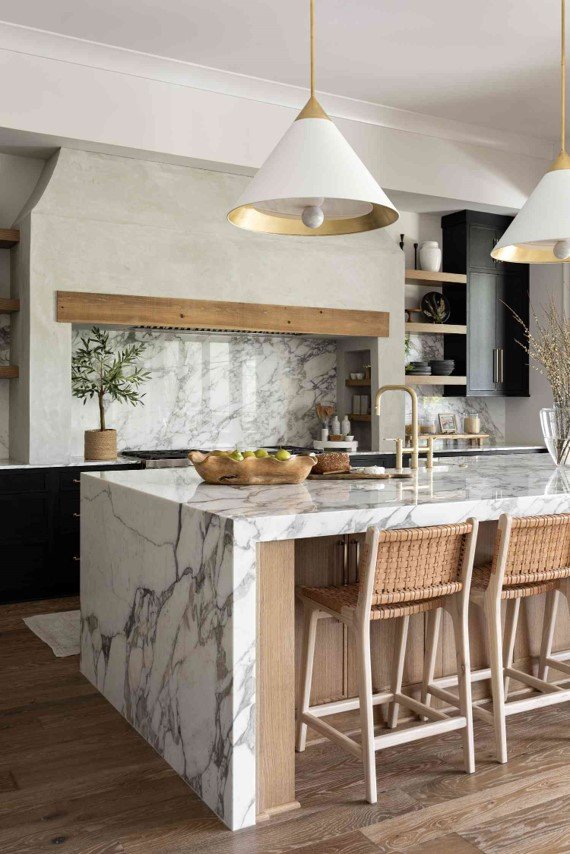
Marble can be especially effective in statement applications such as large islands, luxury bathrooms, custom bars, fireplace surrounds, and other areas where the natural stone becomes an important design feature.
In these settings, the uniqueness of the slab can become part of the property’s identity.
Which Adds More Value to Your Home: Quartz or Marble?
There is no universal winner because home value depends on the property, neighborhood, quality of the renovation, buyer expectations, and how well the countertop complements the rest of the home.
For many mainstream and upscale residential kitchens, quartz may provide the stronger combination of resale appeal, durability, and low maintenance.
For luxury properties where custom materials and architectural distinction are expected, marble may provide greater perceived prestige.
The most expensive material does not automatically deliver the highest return. A professionally fabricated quartz countertop that perfectly complements the kitchen can add more practical market appeal than an expensive marble surface that feels inappropriate for the property’s design or target buyer.
Best Material for Kitchen Countertops
For most kitchens, quartz is particularly attractive because it handles daily use effectively.
It works well for cooking areas, islands, breakfast bars, and large family kitchens where maintenance needs to remain manageable.
Marble can still be an excellent kitchen choice for homeowners who understand the maintenance requirements and appreciate the patina that develops on natural stone.
Best Material for Bathroom Countertops
Bathrooms create a different environment than kitchens because surfaces are less frequently exposed to food acids and hot cookware.
Both quartz and marble can perform beautifully in bathrooms.
Quartz offers easy maintenance and moisture resistance, while marble can create an elegant spa-like appearance.
The choice largely depends on whether convenience or natural luxury is the priority.
Marble-Look Quartz: A Practical Alternative
One reason quartz has become so popular is the development of sophisticated marble-inspired designs.
Modern quartz can feature large-scale veining, subtle movement, warm backgrounds, and dramatic patterns inspired by natural stone.
For homeowners who love the appearance of marble but prefer lower maintenance, marble-look quartz can provide an effective compromise.
It delivers much of the visual impact while reducing concerns about etching, staining, and periodic sealing.
How Cabinet Colors Influence Your Decision
Countertops should never be selected independently from cabinetry, flooring, backsplash materials, lighting, and appliances.
White cabinets work exceptionally well with both marble-look quartz and genuine marble.
Warm wood cabinets can complement creamy quartz surfaces or marble with warmer veining.
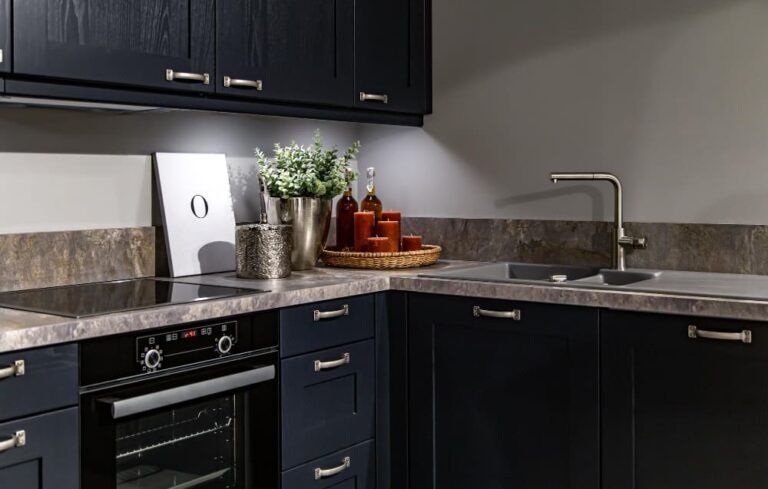
Dark cabinetry often benefits from lighter countertops that create contrast and prevent the kitchen from appearing visually heavy.
Seeing full slabs alongside actual cabinet samples is one of the best ways to make a confident selection.
Common Mistakes When Choosing Quartz or Marble
One of the biggest mistakes homeowners make is selecting a countertop entirely from a small sample. Large slabs can contain movement and patterns that are impossible to understand from a few inches of material.
Another mistake is prioritizing appearance while ignoring lifestyle. A household that cooks frequently and wants minimal maintenance may become frustrated with marble, regardless of how beautiful the material looked in the showroom.
Homeowners should also avoid choosing a contractor based exclusively on price. Precise templating, fabrication, seam placement, edge finishing, cabinet preparation, and installation are essential to the final result.
Why Professional Countertop Fabrication Matters
Premium material alone cannot guarantee a premium countertop.
Experienced fabrication determines how effectively the slab’s pattern is used, where seams are positioned, how edges are finished, and how accurately openings for sinks, faucets, and cooktops are created.
This becomes especially important with highly veined quartz and marble because poor seam placement can interrupt the visual flow.
Professional installation also helps ensure that cabinets properly support the countertop and that the finished surface is level and secure.
How to Choose Between Quartz and Marble
Start by considering how the space will actually be used.
If you want minimal maintenance, strong stain resistance, consistent appearance, and broad design flexibility, quartz is likely the better choice.
If you prioritize authentic natural stone, unique veining, prestige, and timeless character—and are comfortable with additional maintenance—marble may be the better investment.
Budget also matters, but homeowners should evaluate long-term ownership rather than material cost alone.
Quartz vs Marble for South Florida Homeowners
South Florida homeowners often favor interiors that feel bright, sophisticated, and connected to the region’s coastal lifestyle. Both quartz and marble can complement these designs exceptionally well.
Light quartz with subtle veining can create an airy kitchen while remaining practical for daily living. Natural marble can provide a stronger luxury statement in custom homes where material authenticity is a central part of the design.
For homeowners in Pompano Beach and surrounding South Florida communities, the best solution is ultimately the material that fits the home’s architecture, expected usage, maintenance preferences, and renovation budget.
Frequently Asked Questions About Quartz vs Marble Countertops
Is Quartz Better Than Marble for Kitchen Countertops?
Quartz is generally more practical for homeowners seeking a low-maintenance kitchen surface because it is nonporous and highly stain resistant. Marble provides unmatched natural character but requires greater care and is susceptible to etching from acidic substances.
Is Marble More Expensive Than Quartz?
It can be, particularly when comparing quartz with rare or premium marble varieties. However, prices for both materials vary substantially based on slab selection, brand, fabrication, thickness, design complexity, and installation requirements.
Does Quartz Look Like Real Marble?
Premium marble-look quartz can closely reproduce the visual characteristics of marble, including dramatic veining and natural-looking movement. Genuine marble remains unique because every slab is formed naturally.
Does Marble Need to Be Sealed?
Marble is porous and typically benefits from an appropriate sealing program. The correct frequency depends on the specific stone, finish, sealer, usage, and professional recommendations rather than a universal schedule.
Can Quartz Be Used Outdoors in Florida?
Traditional engineered quartz is generally intended for indoor applications unless the manufacturer specifically approves the product for exterior use. Prolonged UV exposure can affect some quartz surfaces.
Which Countertop Is Easier to Maintain?
Quartz generally requires less maintenance because it does not normally require sealing and provides excellent resistance to common household stains.
Which Countertop Is Better for Resale Value?
Both can contribute to resale appeal. Quartz may appeal to a broader range of buyers because of its low maintenance, while marble can create greater perceived luxury in high-end properties. The quality and appropriateness of the overall renovation are more important than the countertop material alone.
Final Thoughts
When comparing quartz countertops vs marble countertops, the right choice depends on much more than appearance.
Quartz provides durability, stain resistance, design flexibility, and low maintenance, making it one of the most practical premium surfaces for modern kitchens. Marble offers authentic natural beauty, distinctive veining, excellent heat resistance, and a level of character that engineered materials cannot fully duplicate.
For many homeowners, particularly those planning heavily used kitchens, quartz offers the strongest balance of everyday functionality and potential resale appeal. For luxury projects where natural materials and architectural distinction are priorities, marble can create exceptional perceived value.
Whether you choose quartz or marble, professional material selection, fabrication, and installation are critical. A countertop that complements the home, performs appropriately for the owner’s lifestyle, and is installed with precision will usually provide far more long-term value than simply choosing the most expensive slab available.