Outdoor Kitchen Countertops in South Florida: Best Materials for Heat Rain and Sun (2026 Guide)
Outdoor kitchens have become one of the most desirable home upgrades in South Florida. With warm weather nearly year-round, homeowners are investing in outdoor living spaces that combine functionality, entertainment, and luxury. At the heart of every outdoor kitchen is the countertop—a surface that must withstand intense sunlight, heavy rain, high humidity, salt air, and daily use.
Unlike indoor countertops, outdoor surfaces are exposed to harsh environmental conditions that can significantly affect their appearance and longevity. Choosing the wrong material may result in fading, cracking, staining, or expensive repairs within just a few years.
This guide explains the best outdoor kitchen countertop materials for South Florida, compares their durability, maintenance requirements, costs, and design possibilities, and helps you choose the ideal surface for your outdoor living space.
Why Outdoor Countertops Require Special Materials in South Florida
South Florida’s tropical climate creates unique challenges that many countertop materials are not designed to handle.
Outdoor kitchens experience constant exposure to:
- High UV radiation throughout the year
- Frequent rainstorms
- Elevated humidity levels
- Salt air near coastal communities
- Large temperature fluctuations between sun and shade
- Heavy outdoor entertaining and cooking
Materials that perform exceptionally well indoors may deteriorate quickly when exposed to these conditions. Selecting weather-resistant materials is essential for protecting your investment.
What Makes a Good Outdoor Countertop?
Before choosing a material, it’s important to understand the characteristics that define a high-quality outdoor countertop.
The ideal countertop should offer:
- Excellent UV resistance
- Low water absorption
- Heat resistance
- Scratch resistance
- Stain resistance
- Structural durability
- Easy maintenance
- Long-term color stability
Materials that combine these qualities generally provide the best long-term value for South Florida homeowners.
Best Outdoor Countertop Materials
Granite
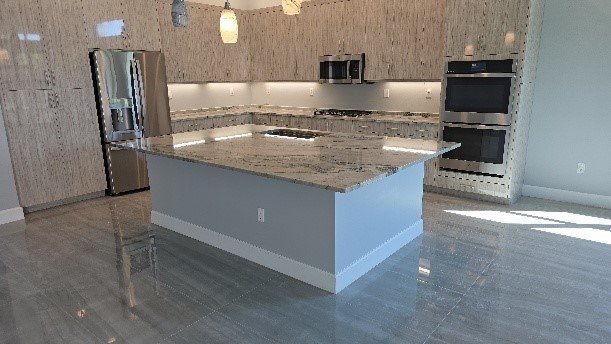
Granite remains one of the most popular outdoor countertop materials because it naturally resists heat and weather while offering timeless beauty.
Properly sealed granite performs exceptionally well outdoors and is capable of lasting for decades.
Advantages of Granite
Granite offers several benefits for outdoor kitchens:
- Outstanding heat resistance
- Natural resistance to scratches
- Unique natural patterns
- Excellent durability
- Wide variety of colors
- Long lifespan
Because every slab is unique, granite creates a custom appearance that enhances luxury outdoor kitchens.
Maintenance Requirements
Granite requires periodic sealing to protect against moisture and stains.
Routine maintenance includes:
- Cleaning with pH-neutral cleaners
- Resealing every one to three years depending on exposure
- Wiping spills promptly
With proper care, granite remains one of the best long-term investments.
Quartzite
Quartzite is often confused with quartz, but it is an entirely natural stone known for exceptional durability.
It combines the elegance of marble with strength comparable to granite.
Why Quartzite Performs Well Outdoors
Quartzite offers:
- Superior UV resistance
- Excellent heat tolerance
- High scratch resistance
- Natural beauty
- Long lifespan
Unlike engineered quartz, quartzite does not contain resin that can degrade under direct sunlight.
Maintenance
Like granite, quartzite benefits from periodic sealing to prevent moisture penetration.
Porcelain Slabs
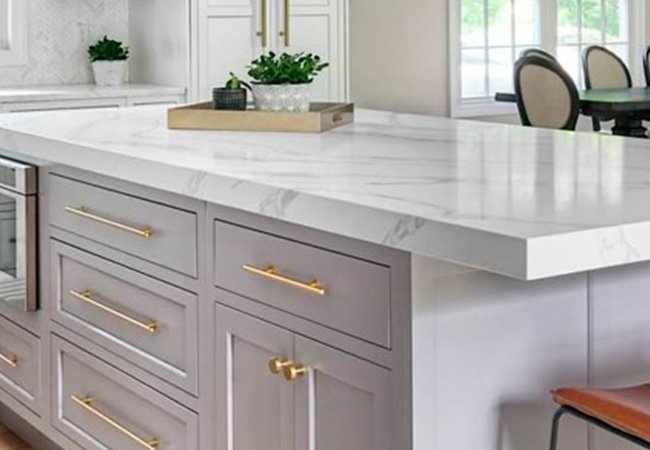
Porcelain has become one of the fastest-growing materials for luxury outdoor kitchens.
Manufactured using high temperatures, porcelain slabs are engineered to withstand extreme weather conditions.
Advantages
Porcelain countertops provide:
- Complete UV resistance
- Zero water absorption
- High stain resistance
- Excellent scratch resistance
- Minimal maintenance
- Lightweight construction
Because porcelain is non-porous, it does not require sealing.
This makes it particularly attractive for homeowners seeking a low-maintenance solution.
Concrete Countertops
Concrete offers unmatched design flexibility and contemporary appeal.
Custom colors, integrated sinks, and personalized shapes make concrete popular for modern outdoor living spaces.
Benefits
Concrete provides:
- Unlimited customization
- Excellent structural strength
- Modern appearance
- Heat resistance
- Ability to create seamless designs
Considerations
Concrete must be properly sealed to prevent:
- Moisture penetration
- Surface staining
- Hairline cracking
Professional fabrication is essential for long-lasting performance.
Soapstone
Soapstone is a natural stone known for its smooth texture and exceptional heat resistance.
Although less common than granite, it performs well outdoors.
Benefits include:
- Heat resistance
- Natural weather resistance
- Non-porous characteristics
- Rich natural appearance
Soapstone naturally darkens over time, creating a distinctive patina appreciated by many homeowners.
Materials That Should Generally Be Avoided Outdoors
Not every countertop material is suitable for South Florida’s climate.
Engineered Quartz
Although quartz is one of the most popular indoor countertop materials, it is generally not recommended for outdoor kitchens.
Direct sunlight may cause:
- Color fading
- Yellowing
- Resin deterioration
- Surface warping
Some manufacturers offer UV-resistant engineered quartz products, but traditional indoor quartz should not be installed outdoors.
Laminate
Laminate countertops are inexpensive but perform poorly in outdoor environments.
Common issues include:
- Water damage
- Delamination
- Heat damage
- UV fading
For permanent outdoor kitchens, laminate should generally be avoided.
Marble
Marble offers undeniable beauty but requires significant maintenance outdoors.
Its porous nature makes it susceptible to:
- Water stains
- Etching
- Surface discoloration
- Accelerated weathering
While possible to use outdoors, marble is best suited for homeowners willing to perform regular maintenance.
Comparing the Best Outdoor Countertop Materials
| Material | Heat Resistance | UV Resistance | Water Resistance | Maintenance | Lifespan |
|---|---|---|---|---|---|
| Granite | Excellent | Excellent | Very Good | Moderate | 30–50+ Years |
| Quartzite | Excellent | Excellent | Very Good | Moderate | 30–60+ Years |
| Porcelain | Excellent | Excellent | Excellent | Very Low | 30+ Years |
| Concrete | Excellent | Excellent | Good (sealed) | Moderate | 30+ Years |
| Soapstone | Excellent | Excellent | Excellent | Low | 30+ Years |
| Quartz | Moderate | Poor | Excellent | Low | Not Recommended Outdoors |
| Laminate | Poor | Poor | Poor | Low | Short Lifespan Outdoors |
Choosing the Right Countertop for Your Outdoor Kitchen
The ideal material depends on how you plan to use your outdoor space.
If durability is your highest priority, granite and quartzite remain outstanding choices.
If low maintenance is most important, porcelain is difficult to surpass.
For homeowners seeking a modern architectural appearance, concrete delivers unmatched customization.
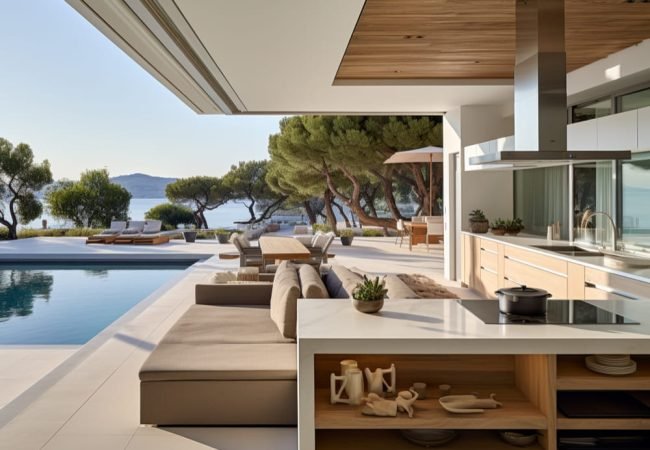
Luxury outdoor kitchens often combine natural stone countertops with stainless steel appliances and premium cabinetry for a timeless design.
Design Trends for Outdoor Kitchens in South Florida
Modern outdoor kitchens increasingly feature clean lines, durable materials, and seamless integration with outdoor living spaces.
Popular design trends include:
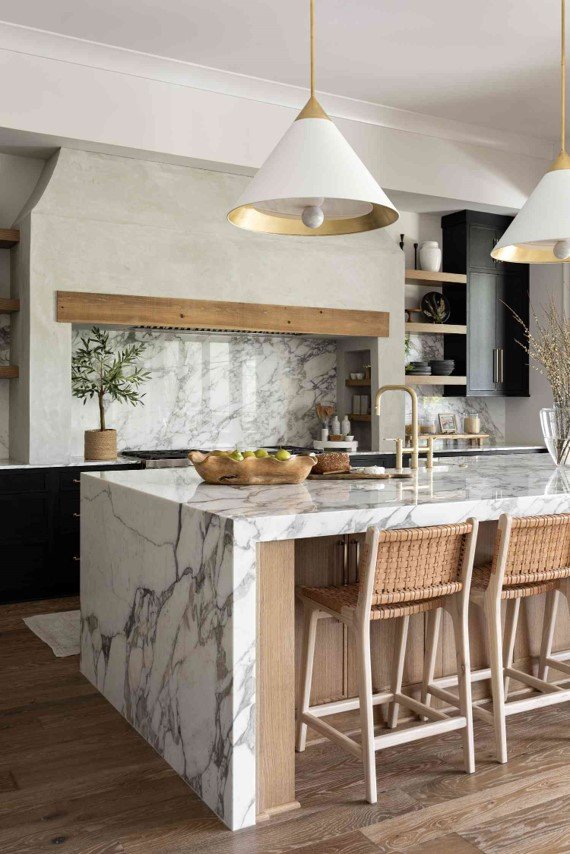
Large Waterfall Islands
Continuous stone panels create a luxurious appearance while maximizing seating space.
Neutral Color Palettes
Gray, white, beige, charcoal, and natural stone tones remain timeless choices that complement tropical landscaping.
Oversized Countertops
Large preparation areas provide ample space for cooking and entertaining guests.
Integrated Outdoor Bars
Many homeowners extend countertops into bar-height seating areas, creating a functional entertainment space.
Maintenance Tips for Outdoor Countertops
Proper maintenance extends the lifespan of any outdoor countertop.
To protect your investment:
- Clean surfaces regularly with manufacturer-approved cleaners.
- Remove standing water after heavy rain.
- Reseal natural stone according to recommendations.
- Avoid abrasive cleaning products.
- Use cutting boards during food preparation.
- Cover outdoor kitchens during severe weather whenever possible.
- Inspect sealant annually for signs of wear.
Consistent maintenance preserves both appearance and structural integrity.
Do Outdoor Countertops Increase Home Value?
Outdoor kitchens consistently rank among the most desirable home improvements in Florida.
Quality countertops contribute significantly by:
- Improving curb appeal
- Expanding usable living space
- Enhancing outdoor entertaining areas
- Increasing buyer interest
- Supporting higher resale values
Homes with professionally designed outdoor kitchens often stand out in competitive South Florida real estate markets.
Final Thoughts
Choosing the right outdoor kitchen countertop is one of the most important decisions when designing an outdoor living space in South Florida. The region’s combination of intense sun, heavy rainfall, humidity, and coastal conditions requires materials specifically suited for outdoor performance.
Granite, quartzite, porcelain, concrete, and soapstone all offer excellent durability when professionally installed and properly maintained. Among these options, granite and porcelain remain two of the best overall choices due to their balance of beauty, longevity, and resistance to Florida’s demanding climate.
By selecting a high-quality material that matches your lifestyle, maintenance preferences, and design goals, you can create an outdoor kitchen that remains beautiful, functional, and valuable for decades.
Frequently Asked Questions
What is the best countertop material for an outdoor kitchen in South Florida?
Granite, porcelain, and quartzite are generally considered the best choices because they offer excellent resistance to heat, UV rays, humidity, and heavy rain.
Can quartz countertops be used outdoors?
Most traditional engineered quartz products are not recommended for outdoor use because prolonged UV exposure can cause fading, discoloration, and resin damage.
How often should outdoor granite countertops be sealed?
Most outdoor granite countertops should be resealed every one to three years, depending on exposure to weather and daily use.
Which outdoor countertop requires the least maintenance?
Porcelain is one of the lowest-maintenance options because it is non-porous, highly resistant to stains, and does not require sealing.
Do outdoor kitchen countertops increase home value?
Yes. Professionally installed outdoor kitchens with durable countertops are highly desirable features that can improve both property value and buyer appeal, particularly in South Florida.